
A Comparison of Workers at Japanese, Foreign-Affiliated, and Startup Companies
Survey Finds 37% of Workers “Could Not Trust” Companies’ DEI Communications, Which May Impact Their Willingness to Apply to New Opportunities
en world Japan K.K., one of Japan’s largest recruitment firms specializing in high-class and global talent (head office: Chuo-ku, Tokyo; President: Yusuke Yamamoto), surveyed employees at Japanese, foreign-affiliated, and startup companies (*1) about perceptions of corporate DEI.
Interest in DEI (*2) has grown among corporations in recent years, leading many organizations to introduce related policies and initiatives. However, the current reality is that how employees evaluate corporate communication about DEI, and how these initiatives may impact company selection and willingness to apply among job seekers, are not sufficiently understood.
Against this backdrop, en world conducted a survey of employees across different company types to examine perceptions of corporate DEI initiatives and the DEI-related factors they consider important when changing jobs.
(*1) For the purposes of this survey, respondents’ workplaces are categorized as “Japanese company,” “foreign-affiliated company,” or “startup.” Respondents who indicated that their company’s business phase was “launch or rapid-growth phase (startup)” are categorized in this survey as “startups” regardless of whether the company is Japanese or foreign-affiliated. Respondents who indicated that their company’s business phase was “mature/stable” and selected either Japanese or foreign-affiliated are categorized as employees of Japanese companies or foreign-affiliated companies, respectively.
(*2) In this survey, DEI (Diversity, Equity and Inclusion) refers to a state in which people with diverse backgrounds—such as gender, nationality, age, sexual orientation, and gender identity—are recognized and provided with equitable opportunities.
Survey Overview
1. 37% Distrust Corporate DEI Communications, Exceeding Those Who Trust Them
Detailed Survey Results
1. 37% Distrust Corporate DEI Communications, Exceeding Those Who Trust Them
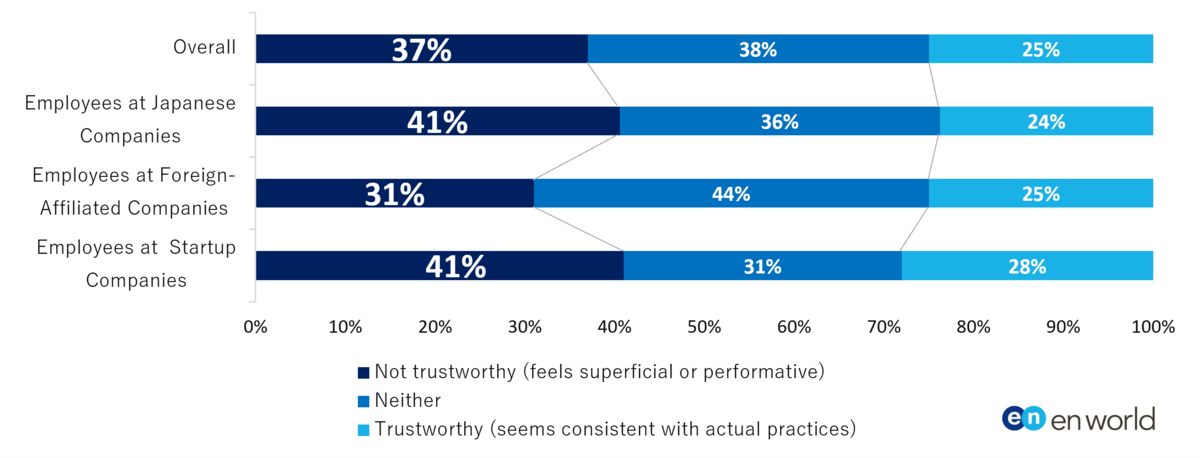
When asked about the credibility of corporate communications on DEI, 37% of respondents said they did not trust such communications, viewing them as merely symbolic or performative. This exceeded the 25% who said they trusted them and felt they were backed by meaningful action by 12 percentage points.
By employer type, 41% of respondents working for Japanese companies and startups said they did not trust corporate DEI communications, compared with 31% of those working for foreign-affiliated companies—a difference of 10 percentage points. [Figure 1]
[Figure 1] How do you generally feel about corporate communications related to DEI?
2. 54% Say Corporate DEI Initiatives Affect Their Willingness to Apply, with Trust Playing a Key Role
Next, respondents were asked about the impact of corporate DEI initiatives on their willingness to apply. A majority (54%) said these initiatives have an impact (*), indicating that corporate DEI efforts have become a factor people consider when choosing a company. [Figure 2]
[Figure 2] To what extent does a company’s stance on and initiatives relating to DEI affect your willingness to apply when considering a new employer?
*“Has an impact” is the total of respondents who answered that DEI stances and initiatives “have a significant impact” (13%) and “have some impact” (41%), while “does not have an impact” is the total who answered that these “do not have much impact” (16%) and “have no impact at all” (9%).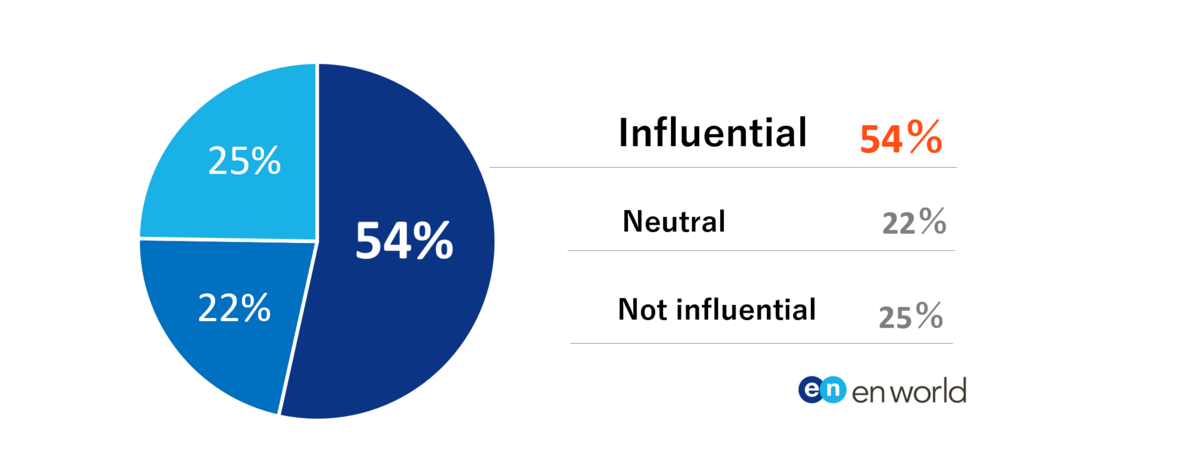 The survey also examined whether respondents’ perceptions of the trustworthiness of corporate DEI communications affected their willingness to consider a new employer. Among respondents who said corporate DEI communications affected their willingness to apply, the percentages who said they could not trust these communications were nearly equal to those who said they could, at 33% and 34%, respectively. Conversely, 55% of respondents who indicated that corporate DEI communications did not affect their willingness to apply said they could not trust such communications, a 46-point increase over the 9% who said they could trust them.
These results suggest that the trustworthiness of corporate DEI communications may impact workers’ willingness to apply for jobs at new employers. [Figure 3]
[Figure 3] For respondents who answered that corporate DEI initiatives “affect/do not affect” their willingness to apply when considering a new employer: How do you generally feel about corporate communications related to DEI?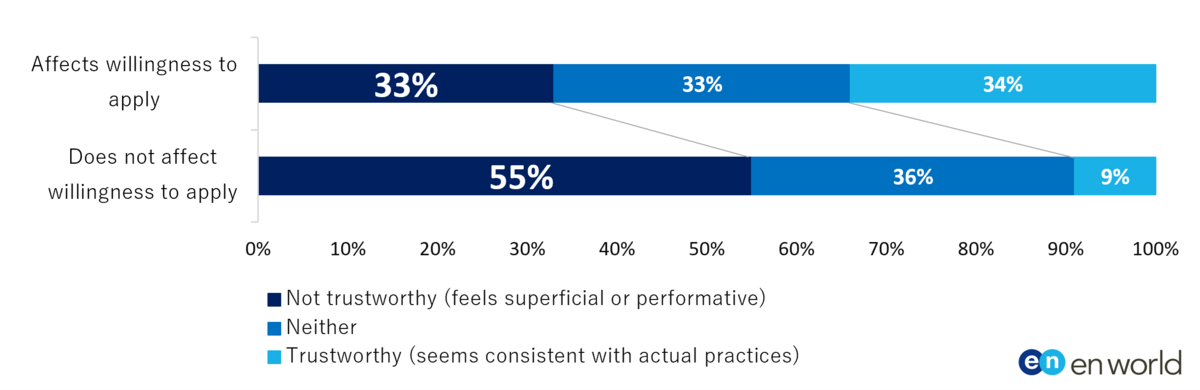
3. Reasons for Distrust: 55% Cite Limited Visibility into Actual Working Conditions; 42% Cite Gaps Between Corporate Communications and External Information
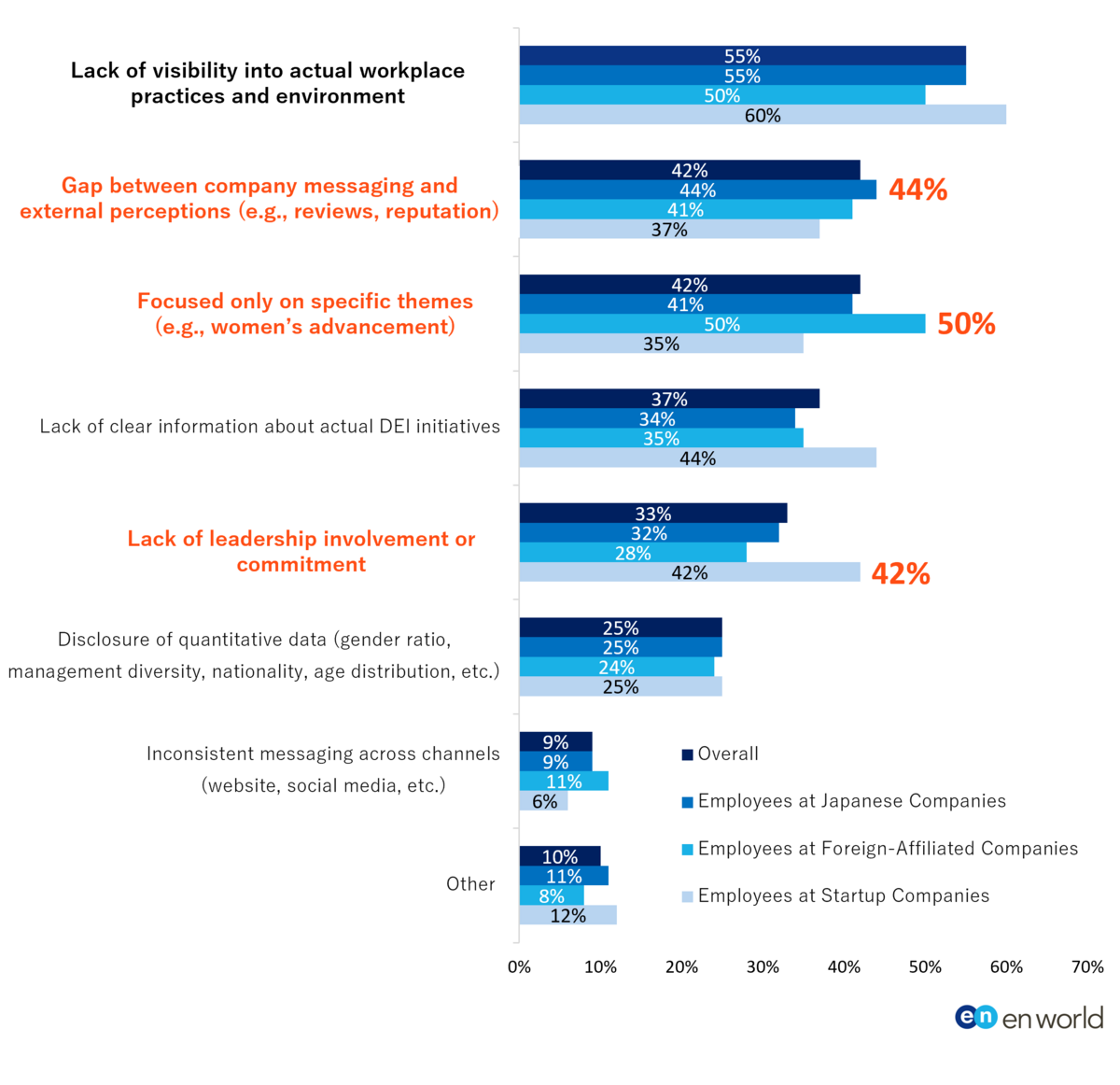
Next, respondents who indicated they felt corporate DEI communications were not trustworthy were asked to cite reasons for their response. The three most common reasons overall among employees at companies of all types were a lack of visibility of employees’ actual working conditions and workplace environment (55%), a gap between the DEI messaging put out by the company itself and publicly available information such as reviews and the company’s reputation (42%), and a perceived bias towards specific themes, such as women’s advancement in the workplace (42%).
The most commonly cited factor among employees at Japanese companies was the gap between the DEI messaging put out by the company itself and publicly available information (44%). This suggests that although companies may have formal DEI policies in place, employees often perceive a gap between communicated initiatives and actual workplace conditions because they have limited visibility into how those initiatives are implemented.
Half (50%) of respondents at foreign-affiliated companies indicated that a company’s bias toward specific themes, such as women’s advancement in the workplace, was the source of their distrust. This suggests that while individual initiatives may be easily recognized, difficulty consistently conveying inclusiveness across the organization as a whole may be affecting the formation of trust.
Among employees of startups, high percentages reported that the actual ways employees work and the workplace environment were not visible (60%) and that they did not feel that management was involved in and committed to their stated DEI initiatives (42%). This may suggest that people struggle to see how these efforts are systematically embedded in the organization’s operations, leading to the perception that the reality is unclear.
These results indicate that challenges related to the trustworthiness of DEI communications stem less from the initiatives themselves and more from the lack of visibility about actual working conditions and workplace environments, as well as gaps between corporate communications and external evaluations. The results also revealed that perceived challenges regarding corporate DEI communications differ by company type. [Figure 4]
[Figure 4] For respondents who responded that they could not trust DEI communications/feel they were just formalities to the question of how you generally feel about corporate communications related to DEI, please tell us why you feel that way. (Multiple responses allowed)
4. Flexible Working Arrangements Rank as the Top DEI Consideration When Changing Jobs (71%); Age (41%) Surpasses Gender (34%)
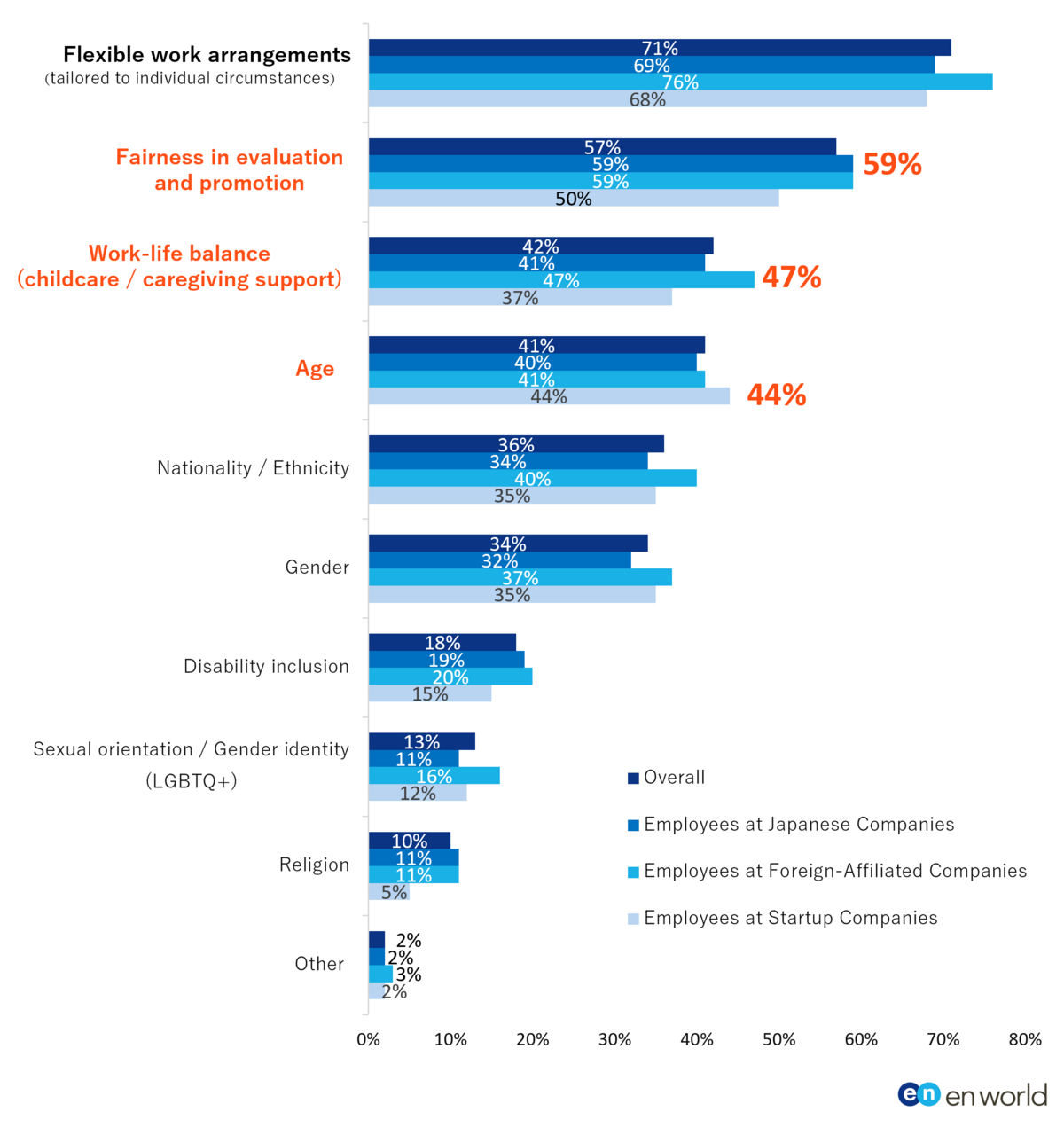
Lastly, respondents were asked which DEI themes are important to them when considering a new employer. The factors that ranked highest among respondents were directly related to flexible work arrangements and career development, with flexible working arrangements ranking highest at 71%, followed by fair evaluation and promotion at 57%, and support for balancing work with childcare and caregiving at 42%.
Additionally, inclusivity regarding age ranked higher at 41% than other factors such as nationality/ethnicity (36%) and gender (34%) across all company types. There was little difference in the percentage of respondents who considered age-based inclusivity important across company types, with a range of 40% to 44%. These results suggest that, among diversity-related themes, employees view an environment where people can thrive regardless of age as an important factor.
Breaking down the answers by company type, this survey found a relatively high percentage of employees at Japanese companies cited fair evaluation and promotion as important factors (59%), suggesting that employees at such organizations value transparency and fairness in evaluation systems. In addition to support for balancing work with childcare and caregiving responsibilities (47%), inclusivity related to nationality and ethnicity also ranked highly among employees of foreign-affiliated companies (40%), indicating a tendency to value not only support for balancing work and family responsibilities, but also consideration for people with diverse backgrounds. Age inclusivity was cited at a relatively higher rate among respondents employed at startups, at 44%, suggesting a somewhat stronger interest in this area than among respondents in other company types. [Figure 5]
[Figure 5] When considering a new employer, please tell us which DEI-related themes or initiatives you consider particularly important. (Multiple responses allowed)
Analysis
This survey suggests that a candidate's willingness to apply for a job is influenced not only by whether a company has DEI initiatives in place, but also by how effectively the company communicates their implementation and impact within the workplace.
The share of respondents who indicated they do not trust corporate communications on DEI exceeded the share who said they do trust them. This majority also accounted for the largest share of those who said DEI messaging does not affect their desire to apply for a job when considering a new employer. This suggests that trust in corporate DEI initiatives may influence willingness to apply. Factors contributing to this lack of trust include limited visibility into actual working conditions and workplace environments, perceived gaps between corporate communications and external evaluations, and a bias toward specific themes. This suggests that the central issues lie not in whether DEI systems exist, but in understanding how they are actually being implemented and ensuring consistent messaging.
This survey also showed that employees tend to prioritize DEI themes that affect their day-to-day work environment, such as flexible work styles, fair evaluation and promotion, and support for balancing work with childcare and caregiving responsibilities. This suggests that workers view DEI not as a set of abstract principles but as practical criteria for assessing ease of work and career development.
These results suggest that DEI is entering a phase in which companies can no longer easily differentiate themselves by simply having initiatives in place. In addition to the design of DEI systems themselves, the implementation of those systems and corporate communication methods regarding the outcomes and impacts of those initiatives will become increasingly important going forward.
As competition for talent intensifies, companies will be expected not only to communicate their DEI initiatives but also to provide transparency and visibility into how they are actually being implemented. In this context, shifting from having DEI policies in place to having DEI policies that function in practice will be key to building trust among candidates and increasing their willingness to apply.
[Survey Overview]
Method: Online survey
Region: Nationwide
Survey Period: May 21-24, 2026
Number of respondents: 1,369
Breakdown of respondents by company type:
Japanese company: 600 respondents
Foreign-affiliated company: 466 respondents
Startup company: 303 respondents
Response Format: Single-answer and multiple-answer questions
▼Download PDF
Corporate DEI Perception Survey_English.pdf
Press Contacts
en world Japan K.K. 12F Tokyo Square Garden 3-1-1 Kyobashi, Chuo-ku Tokyo, 104-0031
Email : enworld-pr@enworld.com